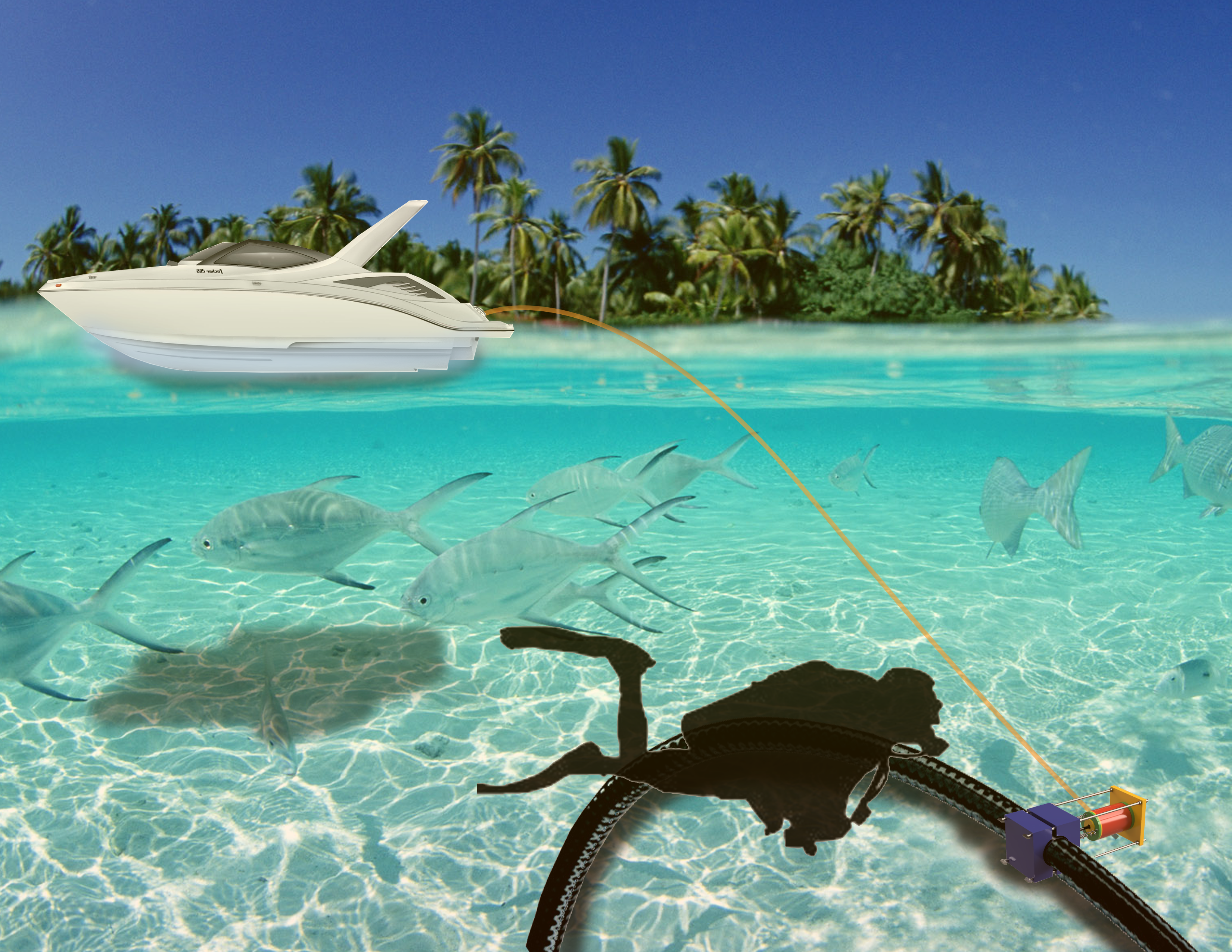
The internet is a medium influenced by political and power dynamics in which geopolitical actors determine its functioning, organisation, and control over internet users. In this dystopian future, the Free and Universal Cut Kit for Internet Dissidence [FUCK-ID] serves as a critical design concept to shed light on the problems of control and surveillance. It visualises the socio-political effects of the physical Internet infrastructure and returns to the users the ability to decide about their data and privacy. In essence, F.U.C.K.-ID is an internet stop button.
‘F.U.C.K.-ID’ is an autonomous cutting device powered by marine currents that can cut underwater Internet cables. It is available from the artist’s website for free download .STL files, for later 3D printing.
According to Sherrie Rabinowitz & Kit Galloway in A Manifesto For The Original 1984 Electronic Cafe Network Project: “WE MUST CREATE AT THE SAME SCALE AS WE CAN DESTROY, “
The way to run it: A diver takes several minutes to attach the screws that tie the device to the cable. Once connected, the spring on the back presses the saw through the cutting surface. The vane in the upper part provides the resistance to drive the pendulum that supports the saw. In a few weeks, the gentle sea movement will cut a 60 mm-thick cable.
Press|Publications Exhibitions:
Exhibition at C.C.C. Chaos CoMmuNications Congress, Art and Play, Hamburg (Germany).
Exhibition at Ars Electronica Theme Exhibition, PANIC: Complex. Absurd. Ominous.
Manuela Naveau (AT) / Co-Curator Linz (Austria).
Exhibition at NeMe.org in the framework of sea blindness. (cyprus).
Exhibition: “A sea on edge,” a critical reflection on the blue economy. Quo Artis. Sant Manuel Pavilion, BHH; Sant Pau Art Nouveau Site (Spain).
Exhibition: MEIAC (Extremadura and Ibero-American Museum of Contemporary Art) Algoritmia ART IN THE ERA OF ARTIFICIAL INTELIGENCE, BADAJOZ (SPAIN).
Exhibition: AMRO Art, hacktivism & open culture. Linz, (Austria).
Exhibition: Drugo More, Critical Triggers, (Rijeka).
The worK of ArT In The Age of ITs TeChnologICAl DIsTrIBUTIon At The InTerneT of oTher people’s Things. Edited by linda Kronman and Andreas Zingerle.
Neural, Hacktivism, E-Music, New Media Art. ISSUE 59/Winter 2018. Printing the Eye, VR now.
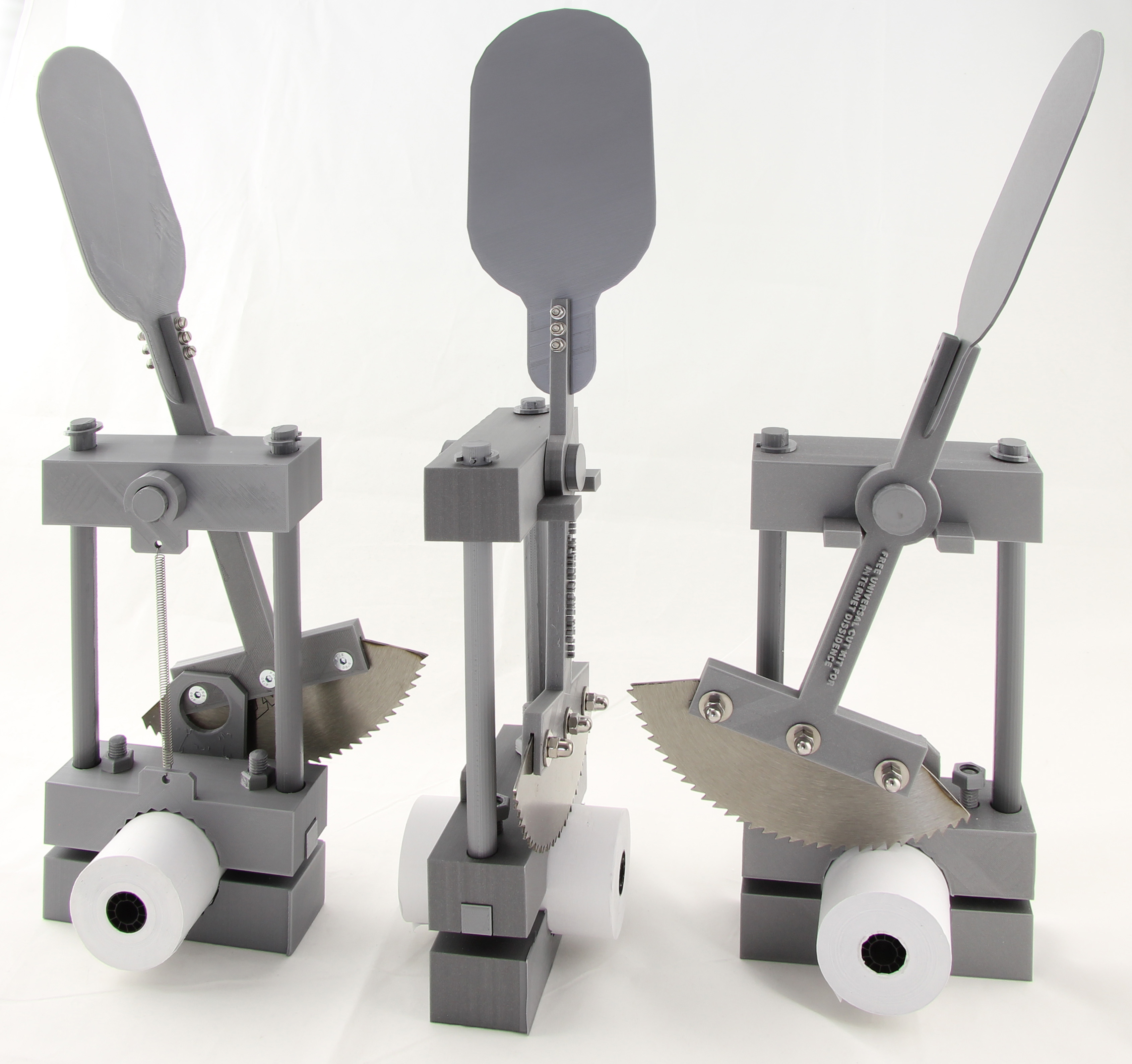
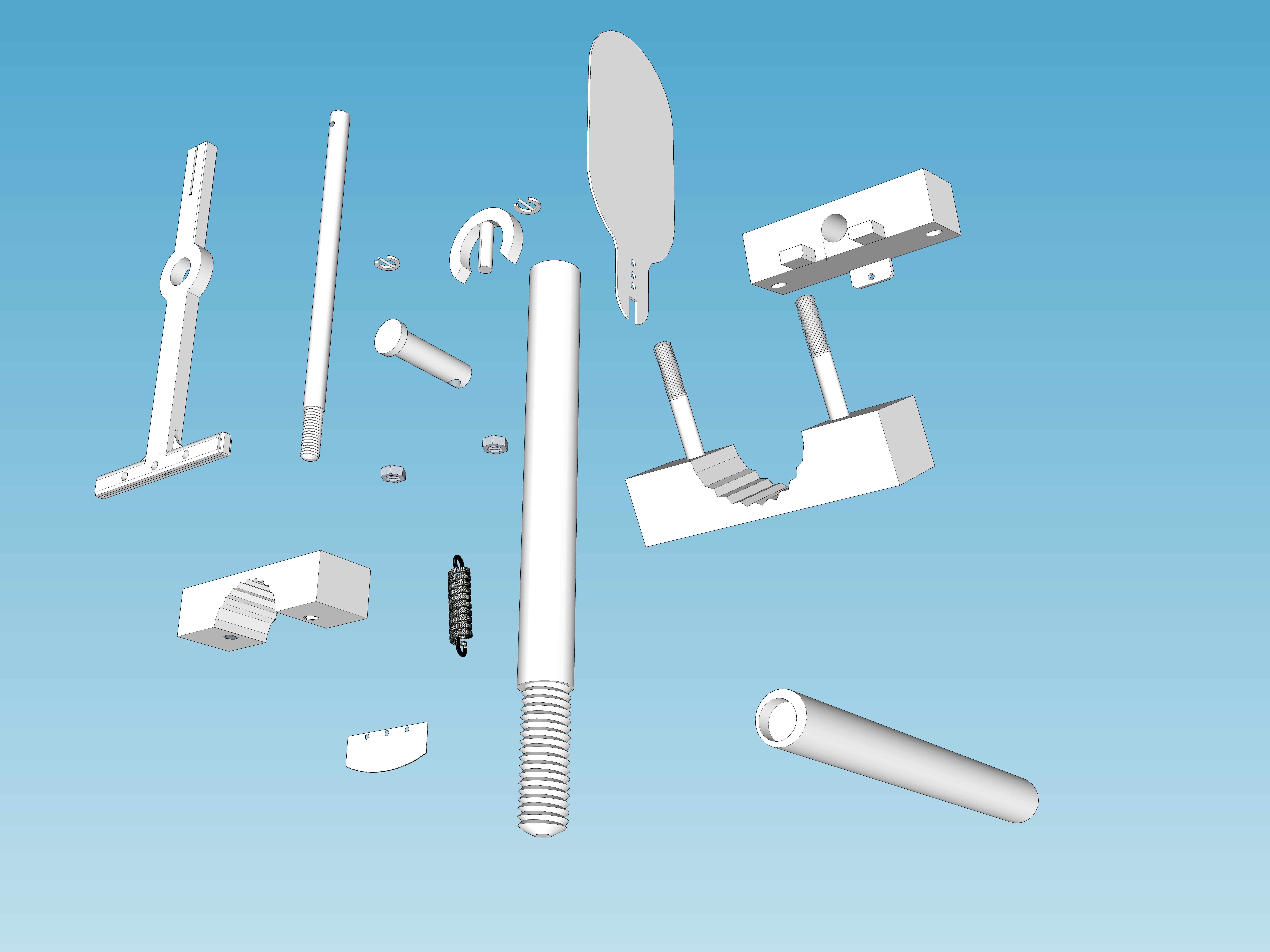

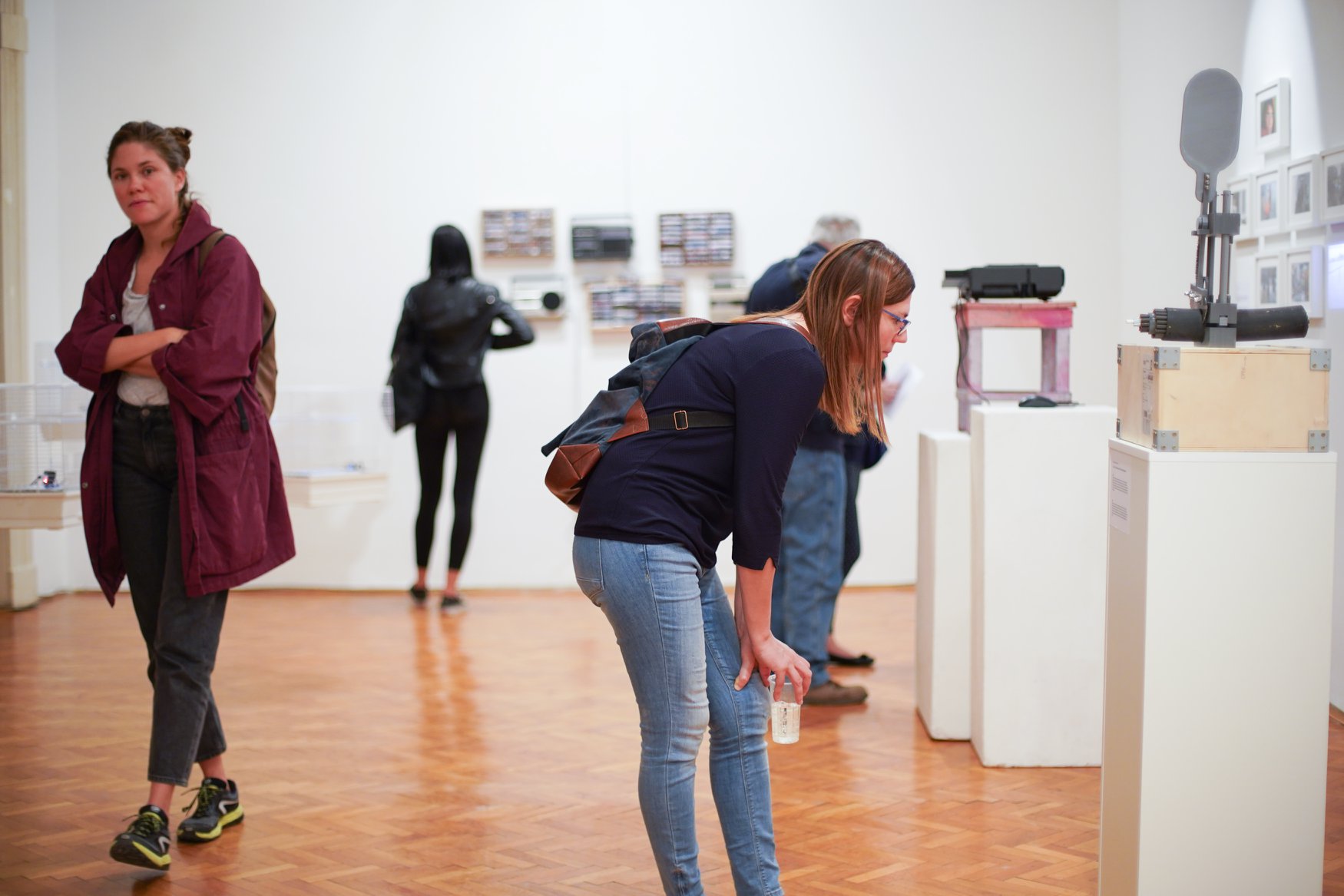
Photo: Kristijan Vučković
Internet DissidenceWorkshop.
BOGOTÁ, NOVEMBER 2017 at Universidad Nacional de Colombia/ Observatorio de Diseño Aplicado, Lab de prototipos y productos (LAPP). Participants: Angela Mora / Felipe Villamil / Sebastian Molina / Alejandro Muñoz / Robinson De Lavalle / Daniela Cifuentes / Mateo Talero / Lina Rojas / Nacor Andrade / Angie Martinez / Christian Dueñas Torres / Daniel Felipe Hortúa S / Vanessa Castellanos / Natalia Alarcon F. / Paula Solano / Juan Manuel Roa / Ana María Fonseca Cubillos / Brajan Styven Jiménez Álvarez / Andres Felipe Sarmiento Capella / German Felipe Hernández Vargas / Juan David Perez Camargo/ Andres Felipe Angel / David Leonardo Pérez Avella / Felipe Preciado Romero / Juan Camilo Cardenas Parra. Co-supervised by: Rolando Ruiz, Coordinador Plan Curricular Diseño Industrial, Investigador del ODA Observatorio de Diseño AplicadoManagement Assistant – Residencias Artística UN, Denisse Estefania Gracia. Espetial Thanks: Nelson Vergara, Enrique Tomás, German Silva Valderrama, Gerardo Garzon Fonseca
[PROJECT 1] TITLE: Sierra Submarina DOWNLOAD .STL
DESCRIPTION: This cutting tool uses a circular saw (1) driven by wave energy. INSTRUCTIONS: Use the floating bollard (2) anchored to the terminal block (A), which when moving transversely or longitudinally activates the pinion system (B), which ends in the rotation of the saw.The pushing force of the saw on the cable is developed thanks to the spring (4), which joins it with the base (5) of the ground with the arm (6), which holds the saw and the gearwheels; at the same time, at the opposite end, it is joined to the base by means of a pivot. (7)
For the development of the activity, print on acetates two maps, one where it shows the location of the different transoceanic cables, and the second one of the buoys or floating beacons, to achieve interposing them and identify, the proximity of the cable with one of the buoys.
[PROJECT 2] TITLE: Taladrín DOWNLOAD.STL
DESCRIPTION:Cutting tool for submarine fiber-optic cables, by means of the rotation of a reel that transmits energy through the movement of a boat. While accelerating the boat, two springs allow the drill to pierce the 6 cms cable disrupting the transit of information through the internet. Materials needed: ABS filament. / 120 cm of ¼ “threaded rod. / 8 safety nuts and 8 ¼ “butterfly nuts. / 3 springs 4 cm long. / Laser cutting parts: 1 square of 10cm * 10cm * 1cm. 2 circles of 6 cm in diameter by 5 mm in thickness. / 1 boat with motor and diving equipment. / 1 conical stepped drill (Nitride and titanium alloy) of 9 cm length. / 1 rod 1 cm in diameter by 15 cm in length. / 1 mandrel for screws.
[PROJECT 3] TITLE: Kraken DOWNLOAD.STL
DESCRIPTION: This device is a cutting system that takes advantage of the movement of the ocean currents by means of a turbine, the water enters and rotates the blades, which through the main mechanism transform the thrust of the waves into potential energy, at its end it has a cutting blade. Once the device is installed on the submarine cable, the blade exerts a constant vertical oscillation that will eventually cut the cable by 60%, which guarantees that the internet signal is disabled.
[PROJECT 4] TITLE: Disconnected DOWNLOAD.STL
DEVELOPERS: Ana María Fonseca Cubillos / Brajan Styven Jiménez Álvarez / Andres Felipe Sarmiento Capella / German Felipe Hernández Vargas / Juan David Perez Camargo
DESCRIPTION: Device for cutting a submarine cable, taking advantage of underwater currents that will move a diamond or tungsten tip that is in contact with the cable in a pendulous way, generating a continuous pressure on its surface and little by little it is expected that it will be able to cut the different layers of polymer and steel to reach the optical fiber that it carries inside. The time it would take to cut a cable would be between 8 and 12 months.


 Space focused on technology, new media and artistic research.