
2025, Investigating Decentralized Action In Art, Conversation with Azahara_cerezo about her work “Desde la Latencia” and my work “An Atlas to Track Blockchain Colonialism” Published in ARTeCHÓ – Investigating decentralized action in art. Artist/fellows: Azahara Cerezo, Carlos Monleón Gendall, César Escudero Andaluz, Cristobal Ascencio Ramos, dmstfctn, Egor Kraft, Fanny Zaman, Hrvoje Hiršl, Ianis Dobrev, OPN Studio, Merlina Rañi, Michele Bazzoli, Paula Kaori Nishijima, Peter Kærgaard Andersen, Silvia Binda Heiserova. Publised Book
____________________________________________________________
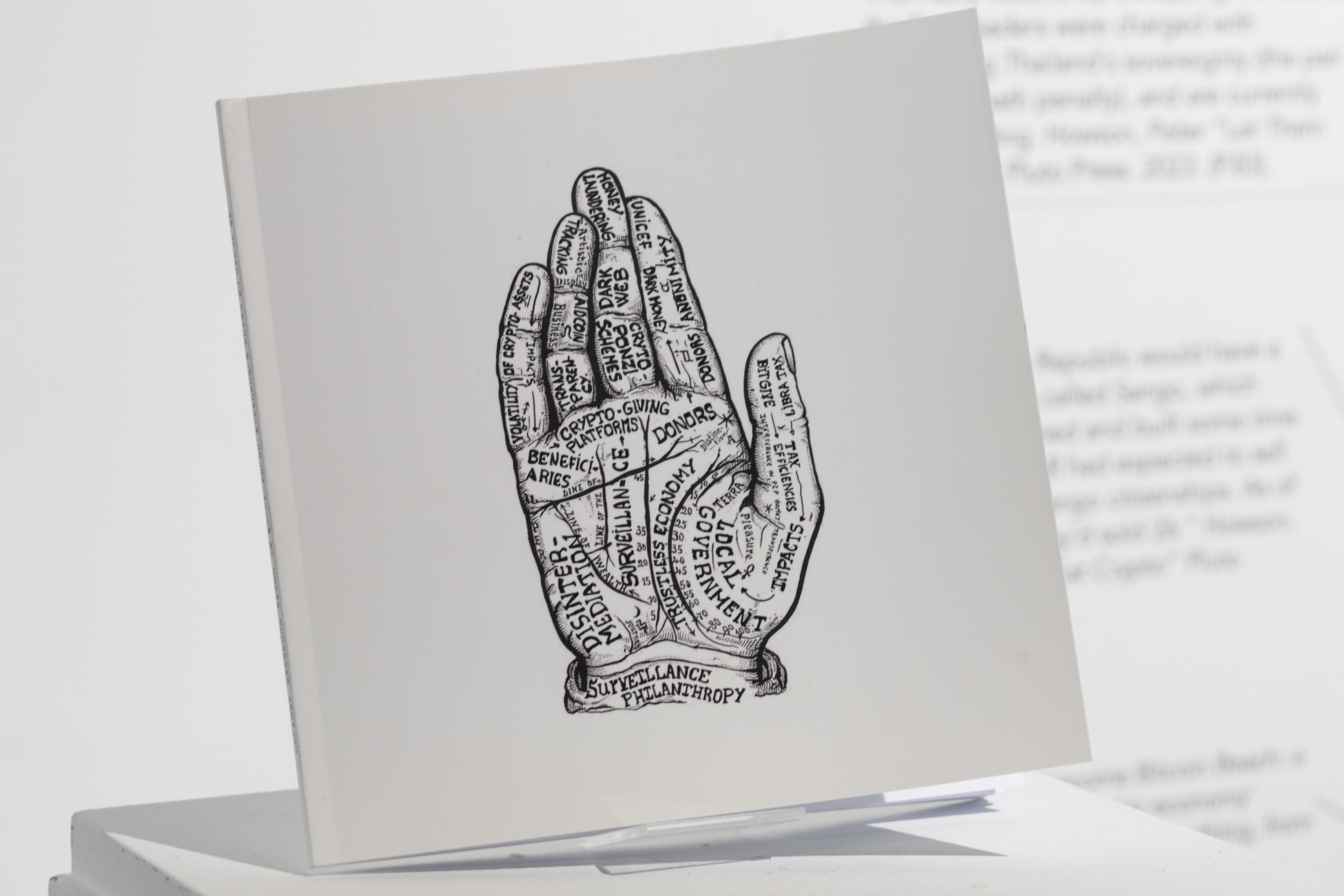
2023-2024, An Atlas to Track Blockchain-Colonialism. To understand Blockchain-Colonialism, we must go beyond cryptocurrency investments, NFTs and metaverses to bring the user closer to a more objective reality. We need to investigate the relationships between planetary resources, human labour, economics, surveillance and
privacy in order to create an image of it. In this relationship,
platforms, infrastructures, devices, corporations, governments and
individuals create a complex picture difficult to be visualised with
integrity. The objective of this atlas is to monitor how blockchain has
been used by individuals, corporations and governments to cross borders
and extract benefits from those most in need, including land, labor,
data, privacy and other resources. Download .PDF an_atlas_02.05.2024_compressed

2022/2023,Article. Metattention, Art and economy in the age of behavioral modification. The Web3 expose a new paradigm in terms of human labour, economics, data and planetary resources. It is promoted by companies obsessed with finding new forms of commercialization and surveillance models. –A new form of extractivism, which is leading to the inevitable creation of DAOs and the NFTisation of everything, merging internet services, social networks and entertainment in the Metaverse.
In the Metaverse avatars are able to move and interact with other avatars and other metaverses, but also to trade with objects, books, music, films and other services that are tokenized. This is the so called “creator economy”. A set-up resulting from experiments in the world of the art market and computer games. The intellectual writer Evgeny Morozov questions this discourse and asks himself: “How does one criticize a flawed, unrealistic, and extremely partial narrative that is, nonetheless, being rapidly turned into reality?”( Evgeny Morozov. Web3: A Map in Search of Territory). Download .PDF
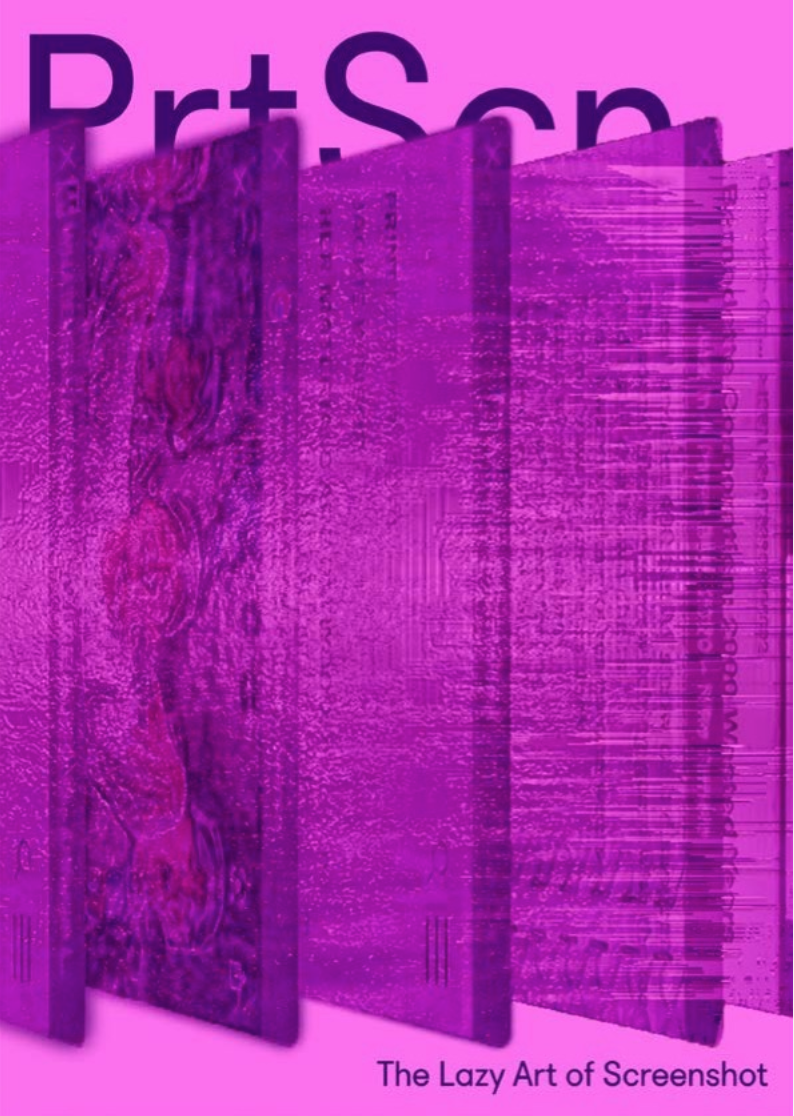
2022, Article. PrtScn: The Lazy Art of Screenshot” Published by the Institute of Network Cultures, Amsterdam Edited by Dunja NešovićThe zine PrtScn: The Lazy Art of Screenshot gathered more than 30 authors in an aim to collectively explore the omnipresent, yet somehow often overlooked, screenshot as a contemporary digital image and practice that fuses the human and machinic boundaries of authorship and vision. As the screenshot travels through networks and is stored away safely in the depths of our hard drives or cloud depositories, a collection of written and visual works featured in PrtScn unpacks these digital movements, freezes and many points (and pixels) in between.
Contributors: Aisha Altenhofen, Chloë Arkenbout, Nima Bahrehmand, Elisa Bergel Melo, Elki Boerdam, Paolo Bruzzo, Lele Buonerba and Laurel Hauge, Jessie Connell, Joana Chicau, Ioanna Digenaki, Megan Dieudonné & Andrea Rüthel, Rebecca Edwards, César Escudero Andaluz, @lbert figurt, Ben Grosser, Gottfried Haider, Roc Herms, Josh Kimball, Nicole Kouts, Olia Lialina, lu, Gabriel Menotti, Maxwell Neely-Cohen, Yoana Pavlova, Georgica Jane Pettus, Ulrich Richtmeyer, Laurence Scherz, Maša Seničić, Zach Shipko, Molly Soda, Matthew Swarts, Agnieszka Wodzińska, F. C. Zuke2022.____________________________________________________________
 2020/2021, Paper. Data Pollution Devices: Artistic Strategies Against Behavior Capture. Technically, the capture of “big data” is usually eclipsed by the complexity of the devices we operate: smart phones, tablets, laptops, Internet of Things (IoTs, ) drones, self-driven cars, all of them equipped with passive sensors, cameras, GPS and tracking software, providing high-level understanding from texts, digital images and videos. According to Philip E. Agre. (2003) These distributed computer systems are able to establish a regime of total visibility through real-time human activities. Besides, these devices are continuously and indiscriminately uploading users information to data-servers where it is managed by companies and data-trackers without authorisation. This paper explores functional aspects and devices involved in the process of data-caption, including internal structures, processes, operations and system‐to‐system relationships of computer tracking. Analysed from the artistic approach, including fields such as Tactical Media, Software Studies and Critical Interface. Download.PDF
____________________________________________________________
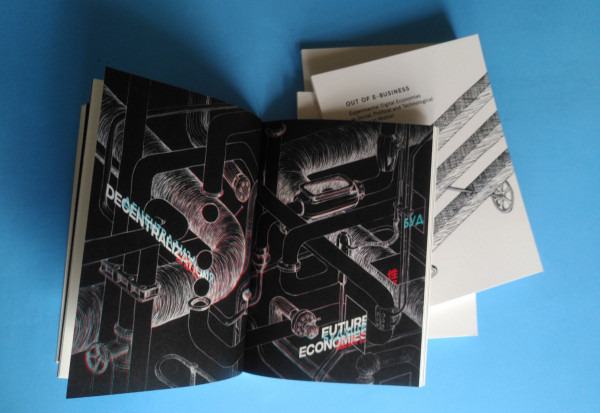 2021. Interview/book. “
 2019 _Article/paper.
  2018 _Article/diagram.
 2017_Article/paper.
  2016_Master Thesis.
 Space focused on technology, new media and artistic research.